
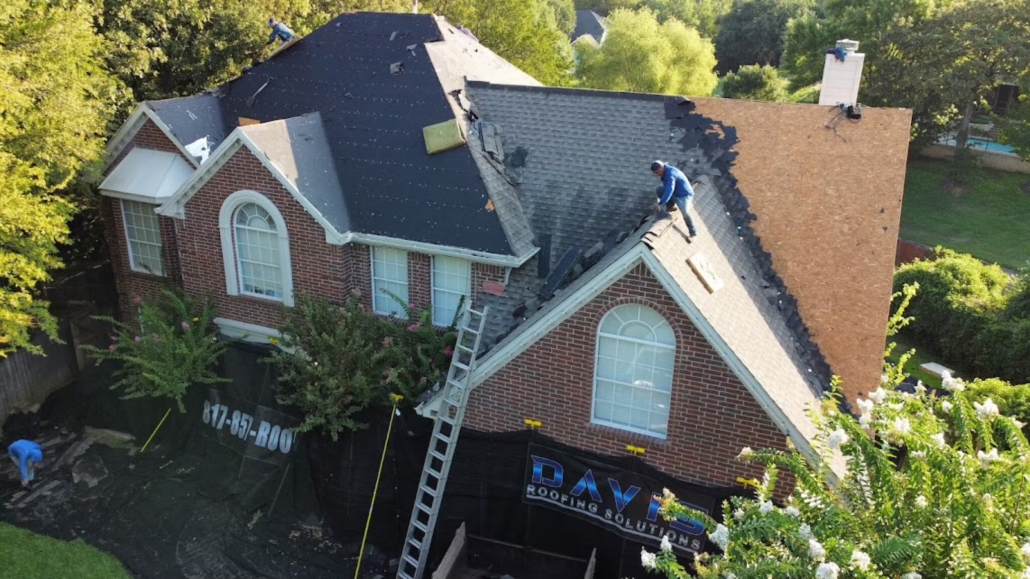
Hail Damage Roofs in North Texas: How to Spot It and What to Do

If you own a home in North Texas long enough, you will deal with hail. The Dallas-Fort Worth area sits squarely in a stretch of the country that sees some of the most frequent and most severe hail storms anywhere, and roofs take the brunt of it. The tricky part is that hail damage is often invisible from the ground, so a roof can look fine while the protective layer that keeps water out has already been compromised. This guide walks through how to spot hail damage, what to do next, and the mistakes that cost homeowners the most.
Why hail is such a big deal for roofs
Hail does not usually punch clean holes in a roof. Instead, it bruises and fractures shingles, knocking off the granules that shield the asphalt from the sun. Once those granules are gone, ultraviolet light starts breaking the shingle down, and what was a cosmetic-looking ding turns into a leak a year or two later. That delay is exactly why so many storm claims get missed. The damage is real the day of the storm, but the water shows up much later.
Signs of hail damage you can look for
You do not need to climb on the roof, and honestly you should not. Most of these signs are visible from the ground or from safer vantage points.
- Dented gutters, downspouts, and metal. Soft aluminum shows hail impacts clearly. If your gutters and vents are dinged, your shingles almost certainly took hits too.
- Granules in the gutters or at the bottom of downspouts. A pile of sand-like granules after a storm is a warning sign that shingles are shedding their protective layer.
- Dents on the AC unit, garage door, mailbox, or fence. These are proof of hail size and impact energy at your specific address, which matters for a claim.
- Bruised or cracked shingles. On the roof itself, hail leaves round, dark spots where granules are knocked away and the mat underneath is soft to the touch. A professional will document these.
- Damaged skylights, chimney caps, or flashing. Impact and cracking around roof penetrations often points to a broader problem.
What to do right after a hail storm
- Stay off the roof. Wet or hail-damaged roofs are dangerous, and walking on them can create new damage that complicates a claim. Do your looking from the ground.
- Document what you can safely see. Take dated photos of dented gutters, dinged AC fins, and any obvious damage. Note the date and time of the storm.
- Get a professional inspection. A qualified roofer will walk the roof, chalk the hits, and give you an honest read on whether the damage is enough to justify a claim. A good inspection is documentation you can use. See our roof inspection checklist for what a thorough one includes.
- Check the storm history. Knowing when and how hard it hailed at your address supports your case. Our North Texas storm maps can help you line up the dates.
Should you file an insurance claim?
Not every storm warrants a claim, and filing for minor cosmetic damage is not always in your interest. But genuine hail damage that shortens the life of your roof usually is a covered event under a standard Texas homeowners policy, and you paid premiums for exactly this. If the damage is real, your out-of-pocket cost is typically your deductible rather than the full price of a roof.
We break the process down step by step in our guide to filing a roof insurance claim in Texas, and we explain the money side in who pays your roof deductible. If you are trying to understand the full price picture, our cost of a roof replacement in DFW guide lays out the ranges.
Beware of storm chasers
After every big North Texas hail event, out-of-town crews flood neighborhoods knocking on doors. Some are legitimate. Many are not. Be cautious of anyone who pressures you to sign on the spot, asks you to hand over your insurance check, or offers to “waive your deductible,” which is illegal in Texas. Work with an established local contractor who will still be here to honor the warranty in five years. Our guide on how to choose a roofing contractor in DFW covers the red flags in detail.
The bottom line
Hail damage is easy to miss and expensive to ignore. If a significant storm has moved through your area, a professional inspection is the smart, low-risk first step. Davis Roofing Solutions offers free hail-damage inspections across the metroplex and can document exactly what an adjuster needs to see. Learn more about our DFW roof repair services or reach out to schedule a look.

